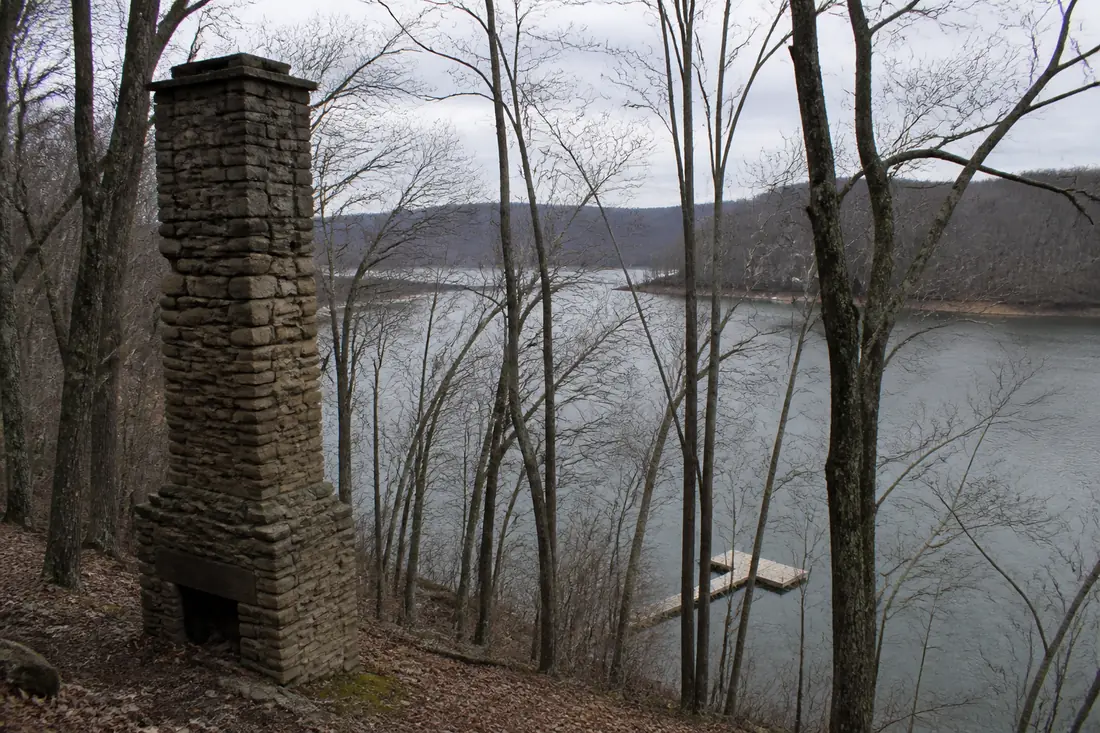
The application went in six weeks ago. The contractor has a slot in April, the boat is bought, and the letter that finally arrives does not mention the dock at all. It mentions the State Historic Preservation Officer, uses the phrase designated historic property, and asks for thirty days.
Nobody has found a shipwreck under the slip. What has happened is ordinary, and it is set out in a document that sits one layer behind the permit regulations themselves: Appendix C to 33 CFR Part 325, the Corps of Engineers’ procedures for the protection of historic properties, published in the Federal Register in June 1990.
It is worth understanding before the letter arrives rather than after, because two of the decisions it forces belong to the applicant, and one of them involves writing a check. It also sits alongside, rather than inside, the reservoir approval most East Tennessee dock owners meet first, which our TVA Section 26a dock permit guide covers separately.
It does not have to be on the National Register
Appendix C works on two terms that sound interchangeable and are not. A historic property is any property with historical importance to any person or group, including things eligible for the Register but not listed on it. A designated historic property is the narrower category that drives the procedure, and a property lands in it three ways: it is listed on the National Register, it has been determined eligible under 36 CFR part 63, or both the SHPO and the district engineer think it appears to meet the criteria for inclusion.
That third route is the one people do not expect. No listing is required, no nomination has to have been filed, and nothing has to be marked on the ground. Where the SHPO and the district engineer agree that a resource appears to meet the criteria, Appendix C treats it as designated, and the review applies to your dock. What reaches an owner at that point is a Corps review letter rather than anything from the National Register.
The criteria themselves come from the Interior Department at 36 CFR 60.4. A property must possess integrity of location, design, setting, materials, workmanship, feeling and association, and then meet at least one of four tests: association with events that made a significant contribution to broad patterns of history; association with the lives of significant persons; embodying the distinctive characteristics of a type, period or method of construction, or the work of a master, or high artistic values; or having yielded, or being likely to yield, information important in prehistory or history.
That last one, criterion D, is why archeology is involved at all. A site does not have to be visible, named or beautiful. It has to be likely to yield information. And the fifty-year rule that normally keeps recent construction off the Register has an escape clause of its own, for a property of exceptional importance.
The permit area can reach up onto your land
A dock is in the water, so it is tempting to assume the review stops at the waterline. It does not. The permit area means the waters of the United States directly affected by the work, plus uplands directly affected as a result of authorizing it, and Appendix C gives three tests which must all be satisfied for an upland activity to count:
- It would not occur but for the authorization of the work in the water.
- It is integrally related to the work being authorized, or the work is essential to the completeness of the overall project.
- It is directly associated with that work, as a first order impact.
The appendix illustrates this with an industrial site reached by a dredged channel, and the illustration transfers cleanly. A new access cut down the bank to reach the dock site, a staging area graded for materials, a bank excavation for a seawall tied to the dock — those are the candidates. A driveway that was going in anyway, or a utility extension driven by something else, generally is not, because the but-for test fails.
The limits run the other way too. Appendix C states that the Corps’ duty to seek eligibility determinations is confined to resources within waters of the U.S. directly affected by the work, and its duty to identify properties is confined to the permit area. It is not responsible for identifying or assessing properties outside that area, though it will still consider the effects of the project on known historic properties beyond it.
One category sits outside that balance. Where an undertaking may directly and adversely affect a National Historic Landmark, section 110(f) of the NHPA directs the district engineer to condition any permit issued, to the maximum extent possible, as necessary to minimize harm to the landmark. That is a stronger instruction than the ordinary weighing, and it applies to very few properties.
What counts as an effect, and what makes it adverse
Paragraph 15 is the part worth reading twice. An undertaking has an effect when it may alter the characteristics that qualified a property for the Register, and alterations to location, setting or use can all be relevant. It is an adverse effect when it may diminish the integrity of the property’s location, design, setting, materials, workmanship, feeling or association.
Five categories are listed, and they are not limited to those five: physical destruction, damage or alteration; isolation of the property from its setting, or alteration of that setting’s character where the character contributes to its qualification; introduction of visual, audible or atmospheric elements out of character with the property or altering its setting; neglect resulting in deterioration or destruction; and transfer, lease or sale.
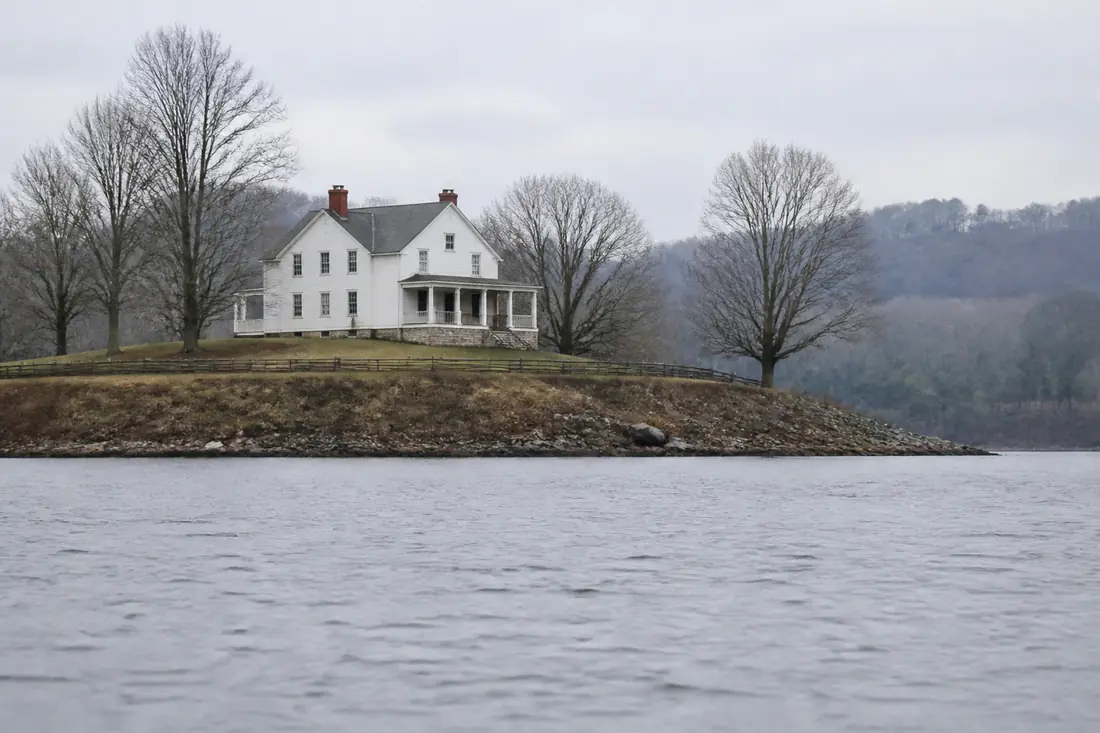
The third of those is the one that can apply to a dock without anything being dug up or disturbed. A two-story boathouse with a metal roof, on open water, in the view from a listed farmhouse on the opposite bank, is a visual element introduced into a setting. The question is whether the setting contributed to why the property qualified, which is a judgment, which is why the process has a consultation stage rather than a formula.
Three outcomes are treated as not adverse even where they otherwise would be: a property valuable only for its research contribution where that value can be substantially preserved by appropriate research; rehabilitation conducted to the Secretary’s standards for rehabilitating historic buildings; and a transfer, lease or sale with adequate preservation restrictions attached.
Three findings that end it early
The district engineer can state in the public notice that the nature, scope and magnitude of the work make a historic property unlikely. Appendix C gives three such situations:
- Areas extensively modified by previous work. Properties that may once have existed there are presumed lost, unless specific information indicates otherwise, and the appendix names a shipwreck as the kind of exception that would.
- Areas created in modern times, such as dredged material disposal islands, which have had no human habitation.
- Work or structures of such limited nature and scope that there is little likelihood of impinging on a historic property even if one is present.
A small residential dock on a long-managed reservoir shoreline is the kind of project the first and third categories are written for, and where the district engineer reaches that conclusion it is stated in the public notice. Which is also why a project that expands sideways, adding bank excavation or a graded staging area, can walk itself out of the third category without anyone intending to.
Comments of a general nature do not trigger an investigation either. The appendix requires specific information: properties known to exist in the vicinity which may be eligible, or known sensitive areas likely to yield eligible resources, particularly where that judgment rests on data from similar areas nearby.
If a survey is needed, the applicant pays for it
This is the sentence to know. Where the district engineer decides an investigation is justified, Appendix C states that in most cases he will require, under 33 CFR 325.1(e), that the applicant conduct the investigation at the applicant’s own expense, and usually by third party contract.
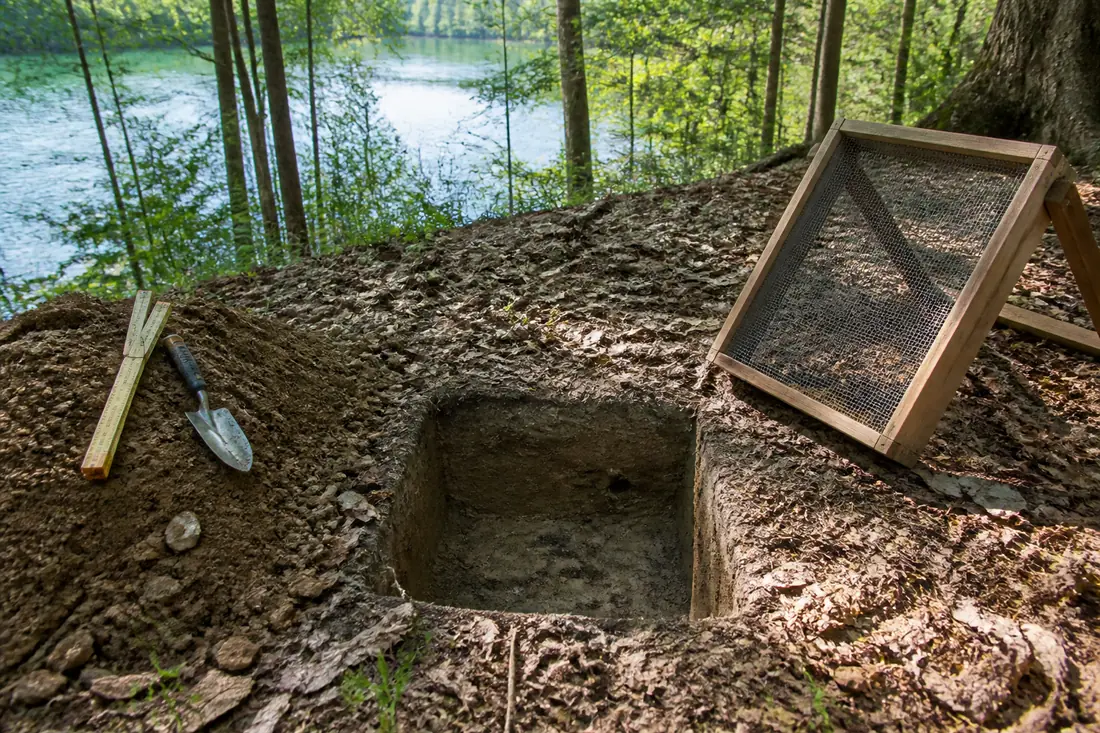
An investigation can mean further consultation with the SHPO, the State Archeologist, local governments, Indian tribes, historical and archeological societies or university archeologists; it can mean a field examination; and it can mean archeological testing. Corps personnel also examine the permit area for potentially eligible properties as part of any site visit, and notify the SHPO if they find evidence of one.
There is no published fee, because this is not a fee. It is a professional service bought on the open market, and what it costs depends on how much ground is in the permit area, how it has to be tested and who is available to do it. Anyone quoting a number without knowing the area to be covered is guessing.
The clock, in the order it runs
The time this adds is not open-ended, and the appendix is unusually specific about it. Taken in sequence, these are the intervals that matter to a schedule:
- 15 days. If the district engineer determines the project has no effect and the SHPO concurs, or simply does not respond within 15 days of the notice, the final decision can proceed.
- 30 days. Where a property is newly designated or newly identified during review, the applicant, the SHPO, the certified local government and the ACHP get 30 days from the date of the district engineer’s letter to comment. A no-adverse-effect determination likewise gives the Advisory Council on Historic Preservation 30 days, after which the decision can be concluded.
- 45 days. Where the SHPO and the district engineer disagree about eligibility, the question goes to the Keeper of the National Register. If the Keeper finds the resource not eligible, or fails to respond within 45 days, the district engineer may conclude the application.
- 30 plus 45 days. If the SHPO responds by nominating the property, the district engineer waits a reasonable period, which the appendix describes as normally 30 days for the nomination plus 45 for the Keeper’s determination.
- 60 days. This is the long one. Where coordination with the SHPO is unproductive, or the ACHP asks for more information or objects to an agreed resolution, the district engineer assembles a package and the ACHP has 60 days from the date of that letter to comment. If it does not comment, processing completes.
Two things are worth noticing in that list. Most of the intervals run from a letter rather than from an event, so a slow letter is a slow project. And several of them end by default, with the Corps proceeding when an agency stays silent, which is the mechanism that keeps the process from stalling permanently.
The package the ACHP receives is four parts: a project description with photographs, maps, drawings and specifications including dimensions and materials; a listing and description of the affected properties with any survey reports; a description of the anticipated adverse effects, the mitigation proposed and the alternatives considered; and the views of commenting parties. Three of those four are easier to assemble if the dock was drawn properly in the first place, which is covered in our guide to reading a dock permit drawing.
How it ends
At any point the district engineer may consult the parties about alternatives or measures that avoid or minimize adverse effects. Where consultation produces a mutual agreement among the SHPO, the ACHP, the applicant and the district engineer, it can be formalized either as permit conditions or as a Memorandum of Agreement, and that MOA constitutes the comments of both the ACHP and the SHPO. The decision can then proceed.
The applicant is a party to that agreement, which is the practical reason to turn up to it with options. Appendix C says the district engineer will discuss measures or alternatives with the applicant at the earliest practical time, and will encourage consideration of historic properties during pre-application consultation. A boathouse moved thirty feet along the shoreline, a roof pitch lowered, a finish changed, or a lift substituted for a covered slip are the kinds of things that end a setting argument. They are far cheaper offered early than conceded in month five.
The outcome is folded into the ordinary public interest decision under 33 CFR 320.4 rather than decided separately, and the district engineer adds whatever permit conditions are needed to avoid or reduce effects. The separate process for how a dock application reaches the public in the first place is covered in our guide to the public notice and comment period.
If something turns up while you are building
Appendix C has a paragraph for this, and it is short. If the district engineer learns after the permit is issued that the permit area holds a previously unknown potentially eligible property that the work will affect, he informs the Department of the Interior’s Departmental Consulting Archeologist and the NPS regional office, and seeks voluntary avoidance of the construction that could affect it pending a recommendation from the Park Service under the Archeological and Historic Preservation Act of 1974.
The word to notice is voluntary. The leverage sits in the next sentence, which provides that based on the circumstances of the discovery, equity to all parties and the public interest, the district engineer may modify, suspend or revoke the permit under 33 CFR 325.7. A contractor who keeps driving piles through a feature is not breaking a stop-work order. They are building a case for one.
Two things that surprise people
Objecting to a listing does not get you out of the review. If a private owner objects by notarized statement before a nomination is submitted, the property will not be listed, and in a district each owner has one vote regardless of how much they own. But 36 CFR 60.6(n) sends that nomination to the Keeper anyway, only for a determination of eligibility, which the Keeper makes within 45 days. A determination of eligibility means the property meets the criteria without being listed, and Interior’s own rule notes it does not bring the grants, loans or tax incentives that listing carries. For a Corps permit, though, a determined-eligible property is a designated historic property. The objection removes the benefits and keeps the review.
You may not be told where the site is. Locational and sensitive information about archeological sites is excluded from the Freedom of Information Act under Section 304 of the NHPA and Section 9 of ARPA. Where disclosure could create a substantial risk of harm, theft or destruction, the district engineer keeps it out of the public notice and furnishes it to the ACHP and the SHPO by separate notice. So a public notice can be silent about the thing holding up the application, and that silence is the rule working rather than failing.
Common mistakes
Treating the first letter as a formality. The 30-day windows are the applicant’s chance to put alternatives on the table while they are still cheap.
Expanding the footprint on land without thinking about it. The upland tests are what pull a bank cut or a staging area into the permit area, and limited nature and scope is a finding the project can grow out of.
Buying the boathouse design before the review. Setting arguments are settled with massing, height and finish. Those are design decisions, and changing them costs a fraction before anything is ordered of what it costs afterward.
Assuming a managed shoreline is cleared ground. Extensive previous modification is a presumption the district engineer may apply, not a rule, and the appendix explicitly preserves the exception where specific information indicates a property is there.
Letting the contractor work through a discovery. Voluntary avoidance is the cheap version of this. Modification, suspension or revocation is the other one.
Before you buy the lot
If the water frontage matters to the purchase, the historic question is worth asking during the inspection period rather than after closing. Three things are knowable in advance: whether anything listed or previously determined eligible sits in view of the frontage, what the shoreline’s modification history looks like, and how much upland work the dock you want would actually require.
None of that needs a consultant at that stage. It needs the SHPO’s public files, a look across the water, and an honest sketch of where the materials would be staged. Appendix C explicitly encourages raising historic properties during pre-application consultation, at the earliest practical time in planning, and the process is built to reward people who do.
The sequence that saves the most time is simple: establish what is in view and what the upland footprint will be before the design is fixed, offer the alternatives yourself rather than waiting to be asked for them, and keep the work inside the footprint the permit describes.
This guide explains the process in plain language and is not legal advice. The regulations as currently published, and the district engineer’s determination for a specific property, control what is actually required.
Sources
- 33 CFR Part 325, Appendix C, Procedures for the Protection of Historic Properties, as published in the 2024 Code of Federal Regulations. Paragraph 1 for the definitions of designated historic property, historic property, undertaking and permit area, including the three upland tests at 1.g.(1) and the worked examples at 1.g.(2); paragraph 2 for the general policy and the encouragement of pre-application consideration; paragraph 3.b for the three situations in which a historic property is unlikely; paragraph 4.b for the 30-day comment window and 4.c for the Freedom of Information Act exclusion under Section 304 of the NHPA and Section 9 of ARPA; paragraph 5 for what counts as specific evidence, what an investigation may consist of, the requirement at 5.e that the applicant pay for it under 33 CFR 325.1(e), and the limits of Corps responsibility at 5.f; paragraph 6 for the Keeper of the National Register’s 45 days and the 30-plus-45 day nomination wait; paragraph 7 for the 15-day no-effect concurrence and the 30-day no-adverse-effect notice to the ACHP; paragraph 8 for consultation and the Memorandum of Agreement; paragraph 9 for the four-part package and the ACHP’s 60 days; paragraph 10 for the public interest decision under 33 CFR 320.4; paragraph 11 for properties discovered during construction and modification, suspension or revocation under 33 CFR 325.7; and paragraph 15 for the criteria of effect and adverse effect. Source note at 55 FR 27003, June 29, 1990.
- 36 CFR Part 60, National Register of Historic Places, as published in the 2024 Code of Federal Regulations. Section 60.4 for the criteria for evaluation, the seven aspects of integrity, criteria (a) through (d) and the criteria considerations including the fifty-year rule and its exceptional importance exception; Section 60.3 for the definition of a determination of eligibility and the statement that it does not confer eligibility for grants, loans or tax incentives; and Section 60.6, including 60.6(g) on notarized owner objections and one vote per owner in a district, and 60.6(n) and 60.6(s), under which an objected-to nomination goes to the Keeper only for a determination of eligibility, to be made within 45 days.