Dock Repair
Structural repairs to existing docks — frames, posts, floats and hardware — on the lakes around Knoxville.
Free estimateDetails
Dock repair, boat lifts and new dock construction on the TVA lakes around Knoxville.
Dock repair, boat lifts and new dock construction on the TVA lakes around Knoxville.
Mon–Fri 7:00am – 6:00pm · Sat 8:00am – 3:00pm · Sun Closed
Straight through to a person, not a phone tree.
Tell us what is going on and we will get back to you with the next step.
The TVA permit is handled before anything is built
Most dock work on a TVA reservoir needs Section 26a approval from TVA, and what it takes depends on the lake and the property. It is worth settling before materials arrive rather than halfway through.
Built for how far your lake actually moves
Winter drawdown differs by reservoir. The design follows the range your water level actually swings, not a standard drawing.
Straight answers on repair versus replacement
Some docks are worth repairing and some are past it. Which one yours is gets said plainly, before a price is attached to either.
Dock repair, boat lifts and new dock construction on the TVA lakes around Knoxville.
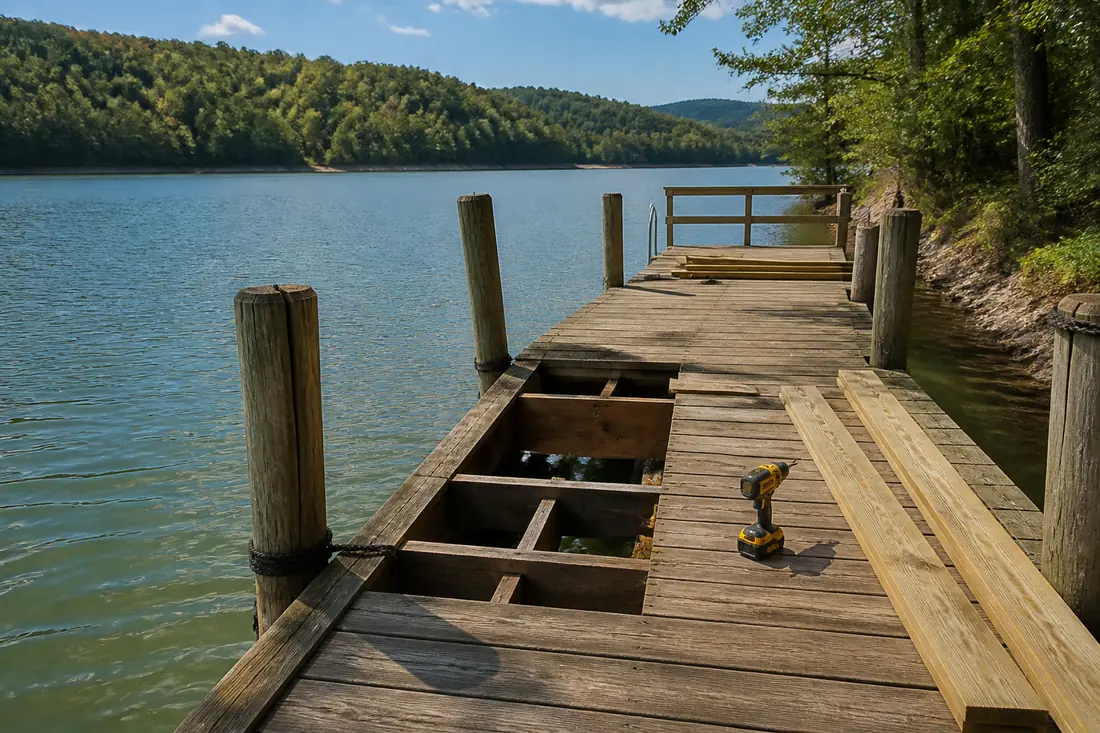
Most dock repair is not really about the deck boards you can see. A dock is a frame carrying a walking surface, and what fails first is usually underneath: posts that have shifted, a stringer that has rotted where it stays wet, hardware that has corroded through, or floats that have taken on water and no longer sit level. The boards are simply where you notice it.
That matters because the two problems have completely different answers. A dock with sound framing and tired decking is a re-decking job. A dock whose frame is moving, or whose posts have lost their footing, is a structural repair whatever the surface looks like. Walking a dock and pushing on it tells you more than photographing it does, which is why the assessment happens on the water rather than from a description.
The other thing that shortens dock life around here is the seasonal water swing. A structure that spends part of the year submerged and part of it dry goes through a wet-dry cycle that punishes untreated timber, unsealed fasteners and any galvanising that was thin to begin with. Repairs that ignore that cycle come back.
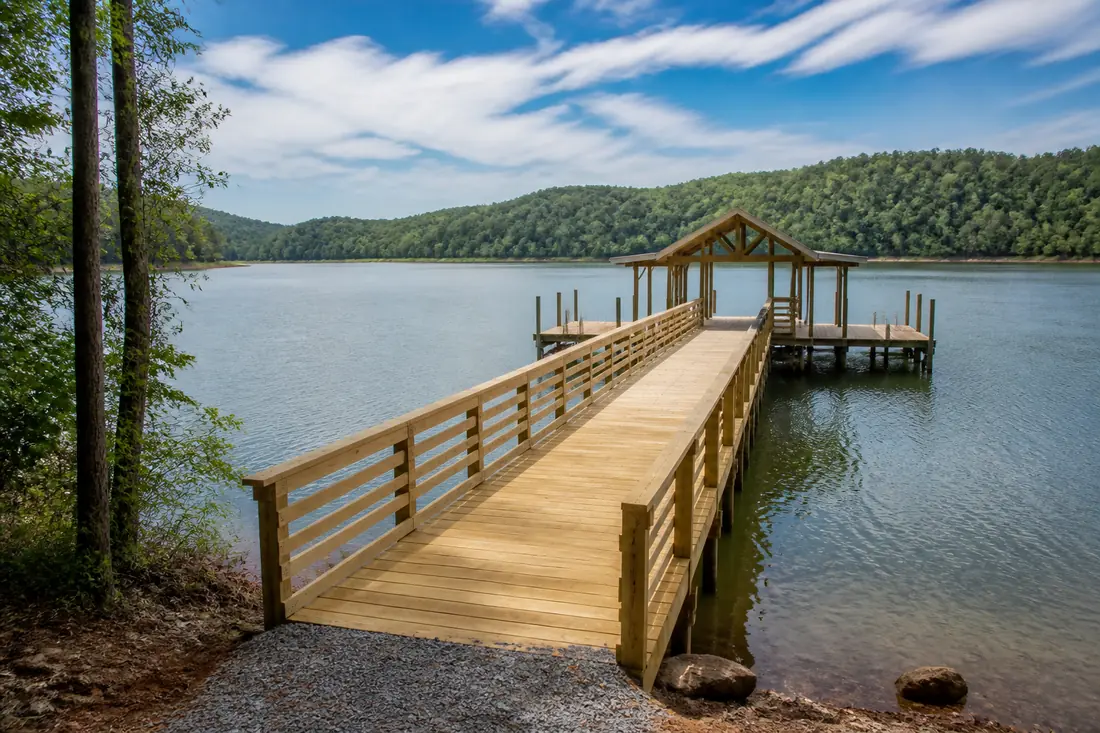
A new dock is a permitting job before it is a construction job. The reservoirs around Knoxville are TVA-operated, and building a new structure on one generally requires TVA approval under Section 26a. That process governs where the dock can go, how large it may be and what type is acceptable, so it sets the design rather than following it. Starting with a drawing and applying afterwards is how projects stall.
The second thing that shapes the design is how far the water moves. TVA draws its reservoirs down for winter flood storage, and the size of that swing varies sharply between lakes — a few feet on some, a great deal more on others. That range decides whether a fixed dock, a floating dock or a combination makes sense, and it is the single most consequential choice on the project.
Only then does the shoreline itself come into it: depth at the end of the walkway, slope of the bank, exposure to wind and boat wake, and how the dock will actually be used. A dock for swimming and sitting is a different structure from one that has to take a boat on and off a lift several times a week, and the difference shows up in size, layout and framing rather than in finish.
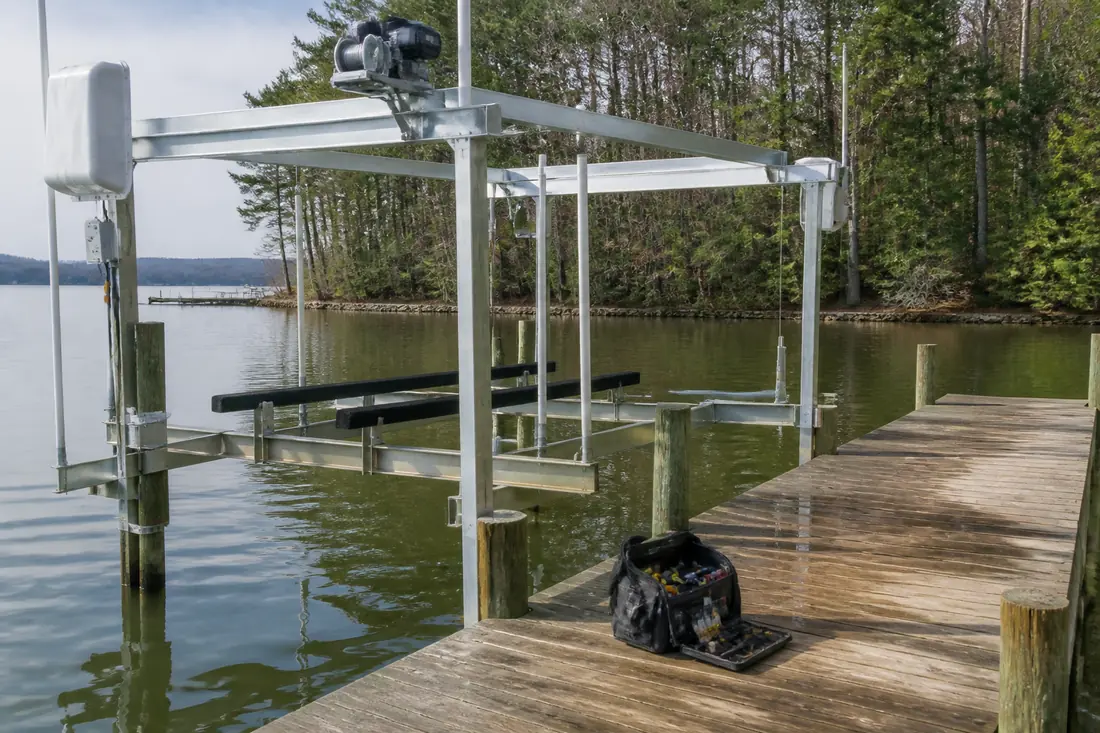
A boat lift is a hoist holding several thousand pounds over water, and it tends to fail in a predictable order. Cables usually go first, from the inside out, so a cable can look serviceable while it has already lost much of its strength. Then the winch and gearbox, then the motor, then the bunks and carpet that actually touch the hull.
Cable is the part worth being uncompromising about. A frayed or rust-stained cable is not a maintenance item to schedule at some point; cable failure means the loss of support for the boat, which makes cable condition a safety matter rather than a maintenance one. Corrosion tends to start where the cable sits inside the drum or passes over a sheave — the parts you cannot see from the dock — which is why inspection means looking at those points rather than at the visible run.
The rest is more forgiving but still adds up. Worn bunks let a hull sit badly and mark it. A struggling motor is often a symptom of a binding drive rather than a failing motor. Guides knocked out of alignment make loading awkward and put uneven load on the frame. None of those are urgent on their own; together they turn a lift into something nobody wants to use.
A floating dock solves the problem that defines this region: TVA reservoirs are drawn down for winter flood storage, and on some lakes that swing is substantial. A fixed dock sized for summer water becomes a platform above mud in February. A floating dock sits on the surface and follows it, so the step from land to deck stays roughly the same all year.
What makes a floating dock work is the anchoring rather than the floats. It has to stay where it belongs through wind, wake and a large vertical range, which means either a piling system it slides on, a stiff-arm connection to the shore, or a cable-and-anchor arrangement. Which is appropriate depends on depth, bottom conditions and how far the water moves, and getting it wrong is what produces a dock that wanders or strains its connections.
The floats themselves are worth understanding. Encapsulated floats — foam inside a sealed polyethylene shell — are the standard because bare foam degrades, absorbs water and sheds into the lake. Float sizing sets how much the dock can carry before it sits low, so intended use belongs in the design conversation rather than being discovered afterwards.
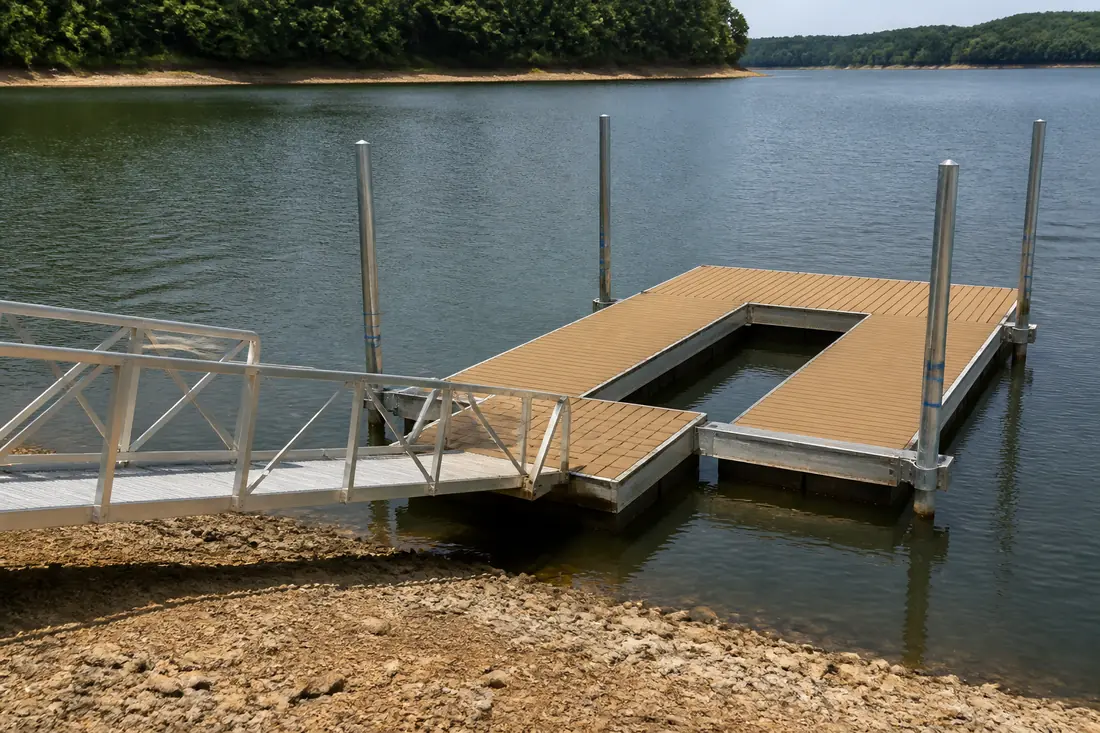
Structural repairs to existing docks — frames, posts, floats and hardware — on the lakes around Knoxville.
Structural repairs to existing docks — frames, posts, floats and hardware — on the lakes around Knoxville.
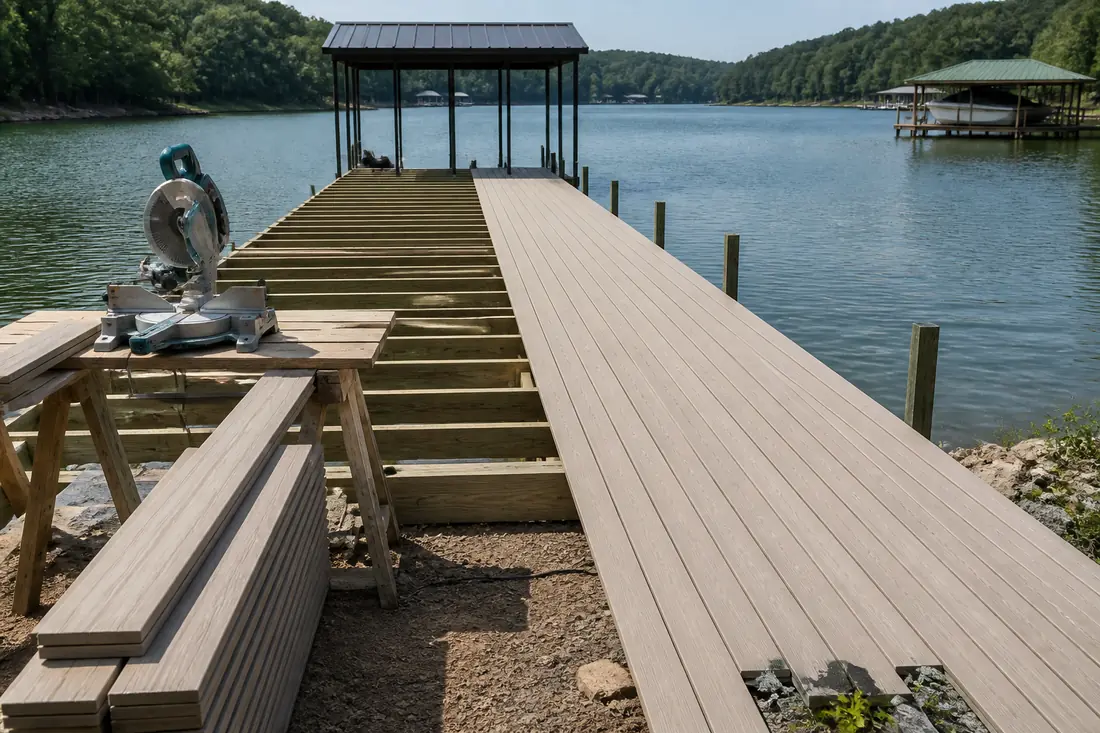
New walking surface over a sound frame — timber, composite or aluminum, chosen for how the dock is used.
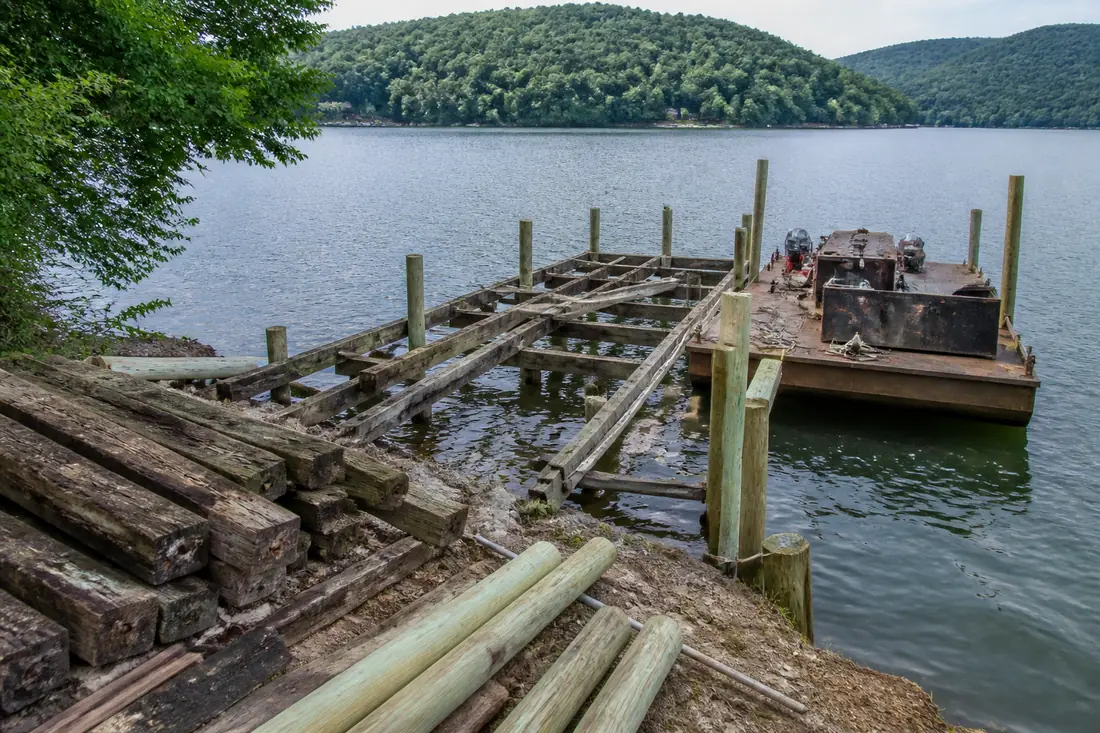
Taking out a dock that is past repair and building its replacement, including the permit that the change requires.
New docks built for the shoreline, the water range and the permit your reservoir actually requires.
New docks built for the shoreline, the water range and the permit your reservoir actually requires.
Docks that rise and fall with the reservoir, for lakes where the seasonal drawdown is too large for a fixed structure.
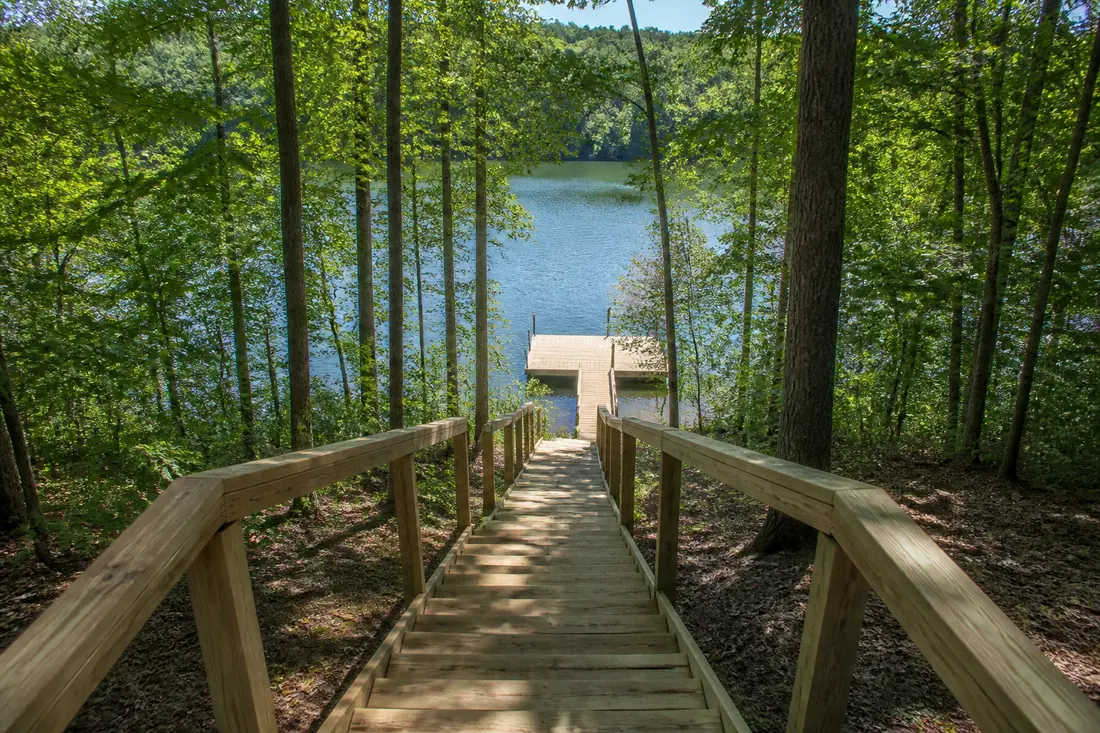
Getting safely from the bank to the water — walkways, steps and piers on steep or difficult shoreline.
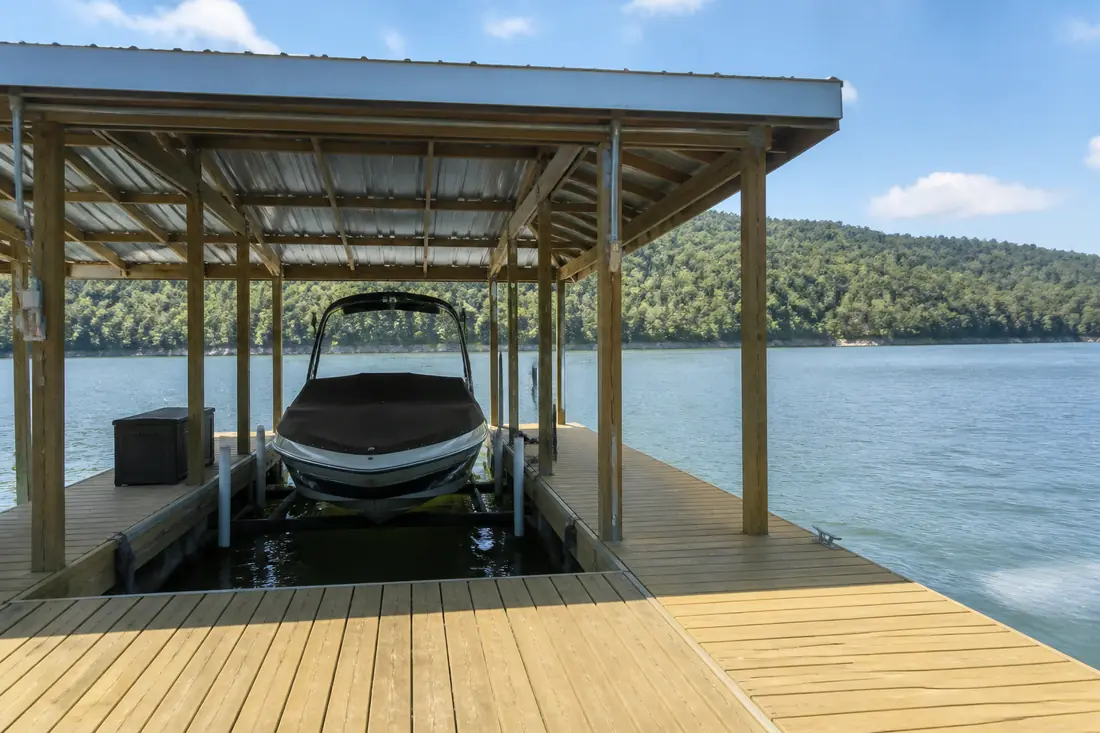
Roofed structures over the water — shade, weather protection and a permitted change with real wind loading.
Cables, winches, motors and bunks — the parts of a lift that fail, and the ones that fail dangerously.
Cables, winches, motors and bunks — the parts of a lift that fail, and the ones that fail dangerously.
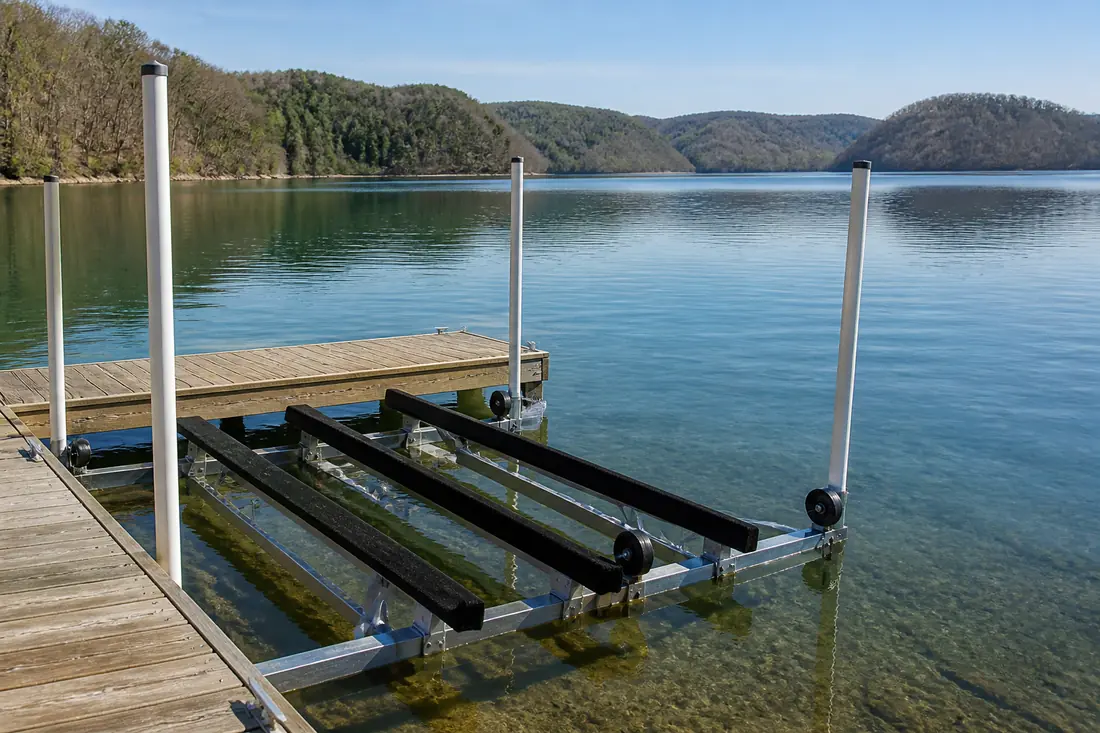
Lifts sized to the boat and the water depth, on a dock built to carry them.
Every service we offer, and what the work actually looks like.
Your request is read and sorted by urgency rather than dropping into a queue. Marking the job urgent on the form changes how quickly it gets looked at.
Work of this kind is assessed in person rather than quoted from a phone description, so the scope and the price are both settled before anything starts.
You see the options and the cost before any work starts, and a cheaper repair that genuinely solves the problem should be presented alongside the bigger one.
Removed material is hauled away and the site left clean. Cleanup belongs in the job rather than being an extra you have to ask for.
If any of this looks like your property, it is worth getting eyes on it before the next wet season.
Flex when you walk on it usually means the frame rather than the decking — a stringer that has rotted where it stays wet, or a post that has lost its footing. It is the sign worth acting on quickly.
On a floating dock that is almost always a float that has taken on water. Bare foam floats absorb water and break down; encapsulated floats are much less prone to it.
A fixed structure built to summer pool on a reservoir that gets drawn down. Common here, and usually solved by rebuilding the lower section or converting to a floating arrangement.
Often a binding gearbox, seized sheave or misaligned cradle rather than a failing motor. Worth diagnosing before replacing anything, and worth inspecting the cables at the same time.
The right dock depends on how far your reservoir is drawn down in winter, how steep the bank is and what the dock has to do. Here is how they compare.
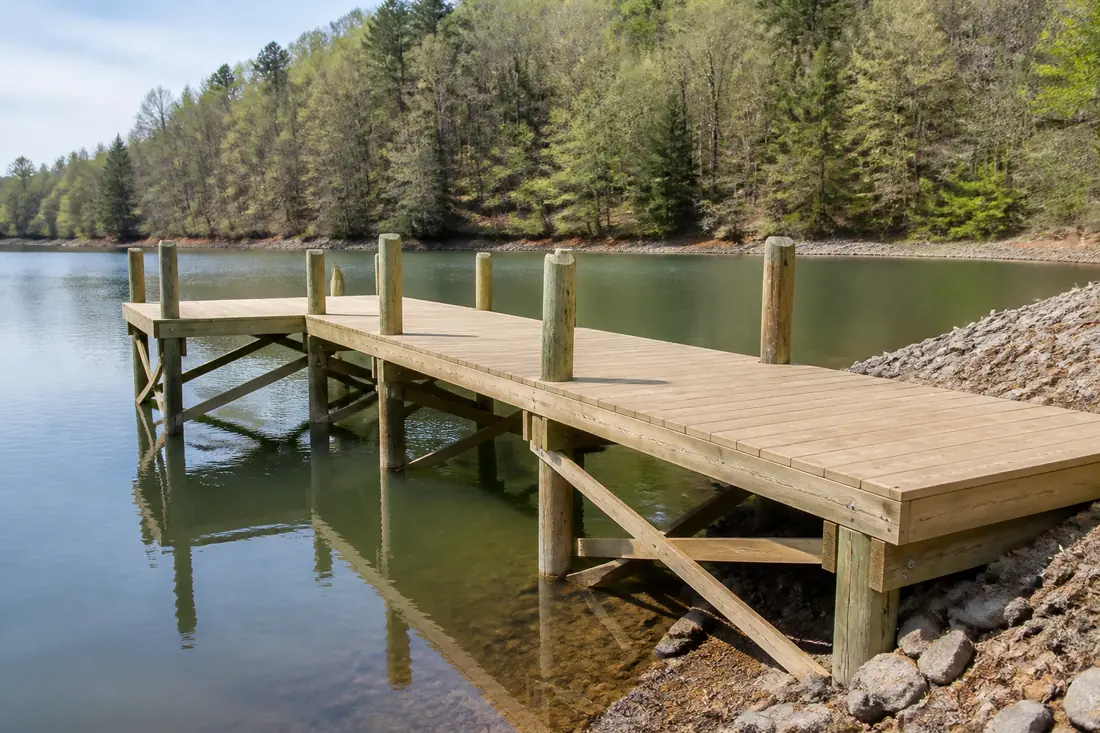
Set on posts or pilings driven into the bottom. Stable underfoot, long-lived and the simplest to build on. Its weakness is the seasonal water range: sized for summer pool, it can be left well above the water in winter.
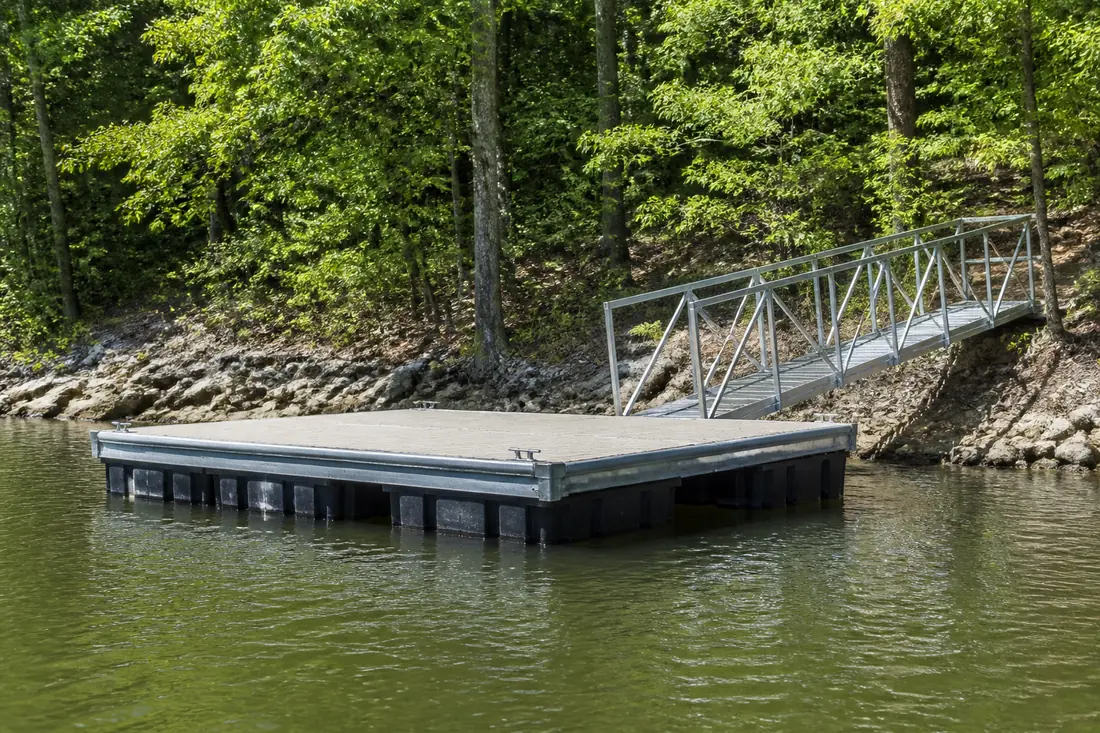
Sits on the surface and rises and falls with the reservoir, so the step onto it stays consistent all year. Needs proper anchoring — pilings, stiff arms or cables — and the floats must be encapsulated rather than bare foam.
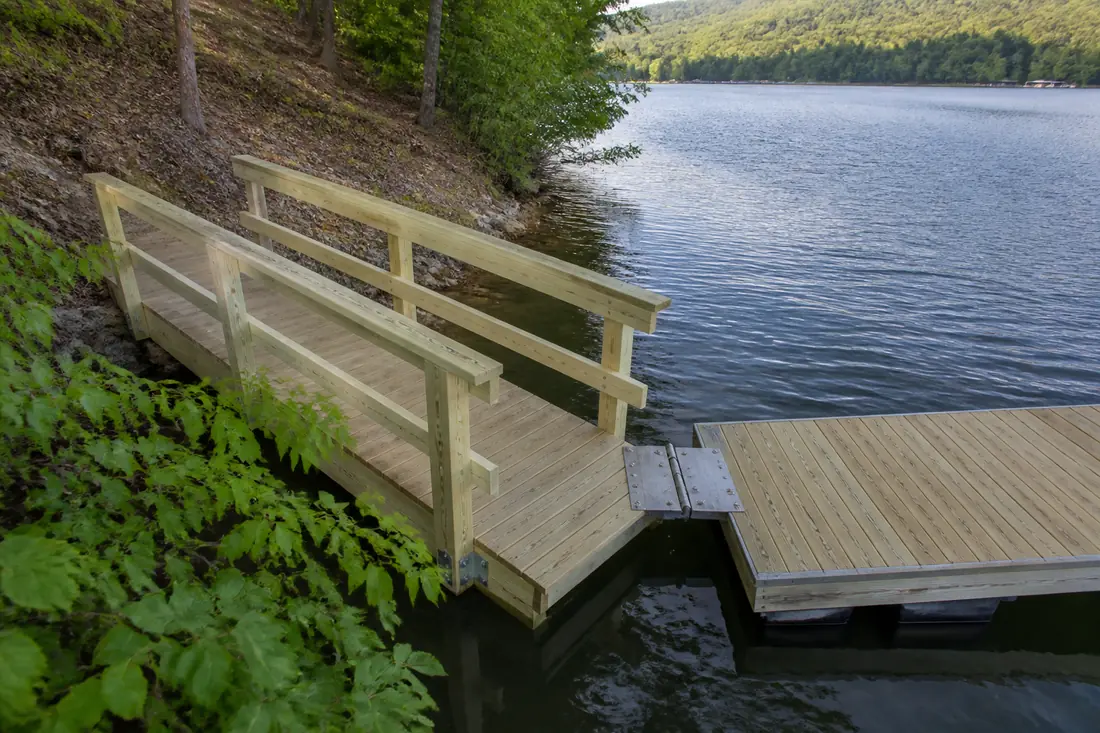
A fixed walkway out to a floating section. It keeps the stability of fixed construction where the bank is steep and gives the floating section where the depth and water range need it. More connections to maintain than either alone.
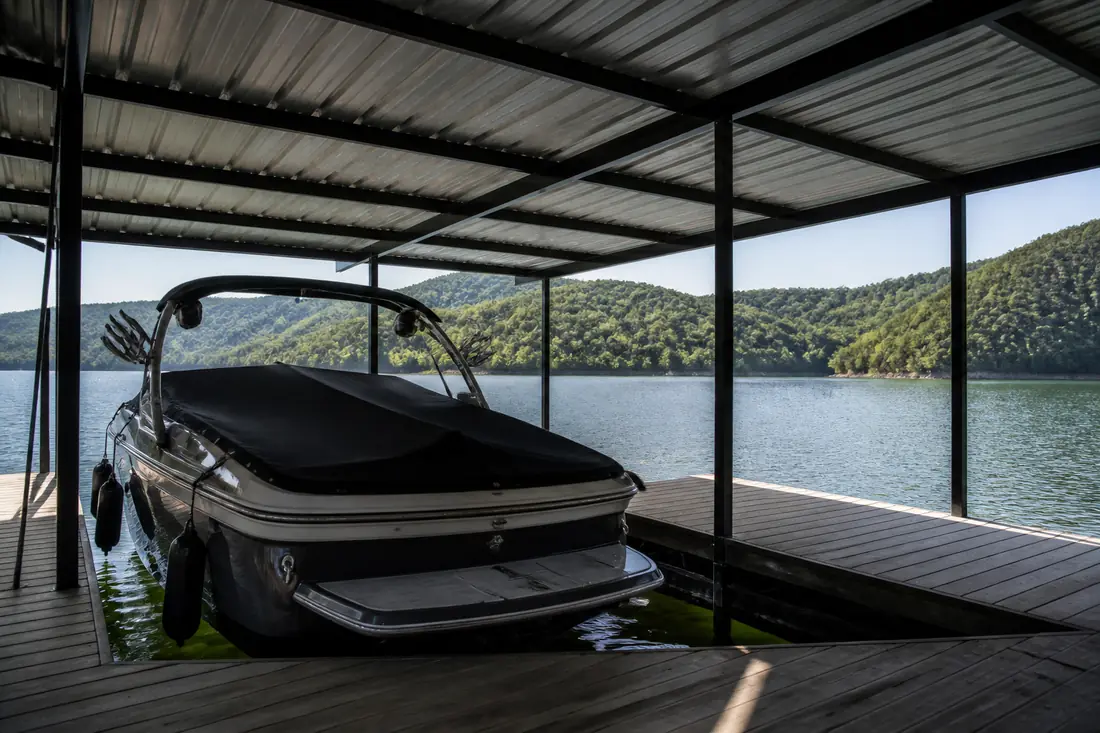
A roof over the mooring. Real protection for a boat that lives in the water through a Tennessee summer, and a structural change rather than an accessory — the roof adds wind load the frame has to be designed for.
A letter naming the State Historic Preservation Officer can stop a dock application for months. What Appendix C actually requires, who pays for the survey, and the clock it runs on.
Read the guide →If a dock needs an individual Corps permit, your name and a drawing of it go out to the adjoining owners and the local press. What the comment period does, and what it cannot do.
Read the guide →Treated wood for a dock is specified by retention and use category, not by "treated". What 0.40, 0.60 and 0.80 mean, and why the end tag is the document that settles it.
Read the guide →31 cities and the communities around them. Not sure if you are covered? Call and ask — we will tell you straight.
Sequoyah Hills · Island Home · Northshore · Concord
37902, 37919, 37920, 37922, 37934
37922, 37934
Tellico Village
37771, 37772
37777
Solway
37830
Loyston Point
37828, 37779
37801, 37803, 37804
37763
37716
37865
37760
37769
37774
37742
37885
Toqua · Tanasi · Chota · Kahite
37774
37748
37854
37381
37705
37807
37766
37714
37757
Flat Hollow
37866
37725
Leadvale · Nina
37890
37862, 37876
37813, 37814
37861
37708
For anything on a TVA reservoir, yes for new construction and for changes, and often not for a genuine like-for-like repair. TVA administers this under Section 26a and it covers building, altering or replacing a structure on its reservoirs. It is separate from anything the county or city requires. Because the boundary sits exactly where repair starts becoming modification, it is worth confirming before work begins rather than afterwards.
The reservoir decides it more than preference does. TVA draws its lakes down for winter flood storage and the size of that swing varies enormously — Melton Hill is held nearly steady, Fort Loudoun and Tellico move within a fairly narrow band, and the storage reservoirs like Norris and Douglas move a great deal. A fixed dock is simple and stable where the range is modest. Where the water moves a long way, a fixed dock is unusable for part of the year and floating is the answer.
Because it was built to summer pool on a reservoir that gets drawn down for flood storage. It is one of the most common problems on these lakes and it is a design issue rather than a fault in the construction. The usual fixes are rebuilding the lower access section for the full range, or converting to a floating arrangement so the dock follows the water.
Longer than most people expect when the frame is right and the hardware suits permanent immersion, and much less when either is wrong. What shortens it is the wet-dry cycle these reservoirs impose: a structure that is submerged part of the year and dry the rest finds every untreated cut, unsealed fastener hole and thin galvanising. Frame and fixings decide dock life far more than the decking does.
It depends on size, whether it is fixed or floating, water depth, how difficult the shoreline is to reach, and whether a lift or a roof is involved. The permit process also affects what is buildable in the first place. Rather than publish a range that would not survive contact with your shoreline, the useful step is a quote against the actual site.
On a schedule rather than when they look bad. Cables corrode from the inside and at the points you cannot see — inside the drum and over the sheaves — so a cable can appear serviceable while it has already lost much of its strength. Any cable showing broken strands, rust staining or flat spots gets replaced immediately. Cable failure means losing support for the boat, so it is treated as a safety item.
Frequently more easily, because the reservoirs are drawn down and structures are more accessible with the water lower. The trade-offs are a shorter working day and colder conditions. Which season suits depends on your lake and on what the work involves — winter drawdown is genuinely an advantage for some repairs.
Mainly how far they move. Melton Hill is held very steady, which is why it is used for rowing. Fort Loudoun and Tellico are navigation pools kept within a fairly narrow band. Norris, Douglas and Cherokee are storage reservoirs and swing a long way seasonally. That difference drives dock type, access design and what a permit will allow, so a design that works on one lake often does not transfer to another.
Call (865) 348-3365 or request a callback — whichever is easier.